
Recover more buyers at checkout
Use this path when a story mentions checkout abandonment, hosted checkout, mobile checkout, payment options, Shopify, Stripe, PayPal, one-time orders, or subscriptions.
Customers
Real teams using Plandalf Offers, hosted checkout, Shopify integrations, upsells, save offers, and Timers to sell online with fewer disconnected tools.
Customer paths
Customer stories should route builders into the exact Plandalf surface behind the result: checkout conversion, product pricing, order value, deadline campaigns, invoices, integrations, webhooks, and purchase automation.
Use this path when a story mentions checkout abandonment, hosted checkout, mobile checkout, payment options, Shopify, Stripe, PayPal, one-time orders, or subscriptions.
Use this path when a story mentions order bumps, upsells, add-ons, product packaging, prices, coupons, or checkout templates.
Use this path when a story mentions Timers, deadlines, expiring coupons, save offers, email countdown GIFs, limited drops, or launch windows.
Use this path when a story mentions purchase events, invoices, fulfilment, CRM updates, integrations, webhooks, support context, or records.
A useful customer story should connect the outcome to the exact checkout, subscription, one-time price, upsell, order bump, save offer, Timer, and integration choices that created it.
DTC / Subscriptions
How a direct-to-consumer coffee brand replaced three tools with Plandalf, cut checkout abandonment by a third, and added a save offer that recovers ~18% of cancellations.
“We were running Shopify, a third-party upsell app, and a separate save-flow tool. Plandalf collapsed all of it into one place that we actually understand.”
The useful story is not only the metric. It is the checkout, upsell, order bump, save offer, Timer, and integration path a builder can copy.
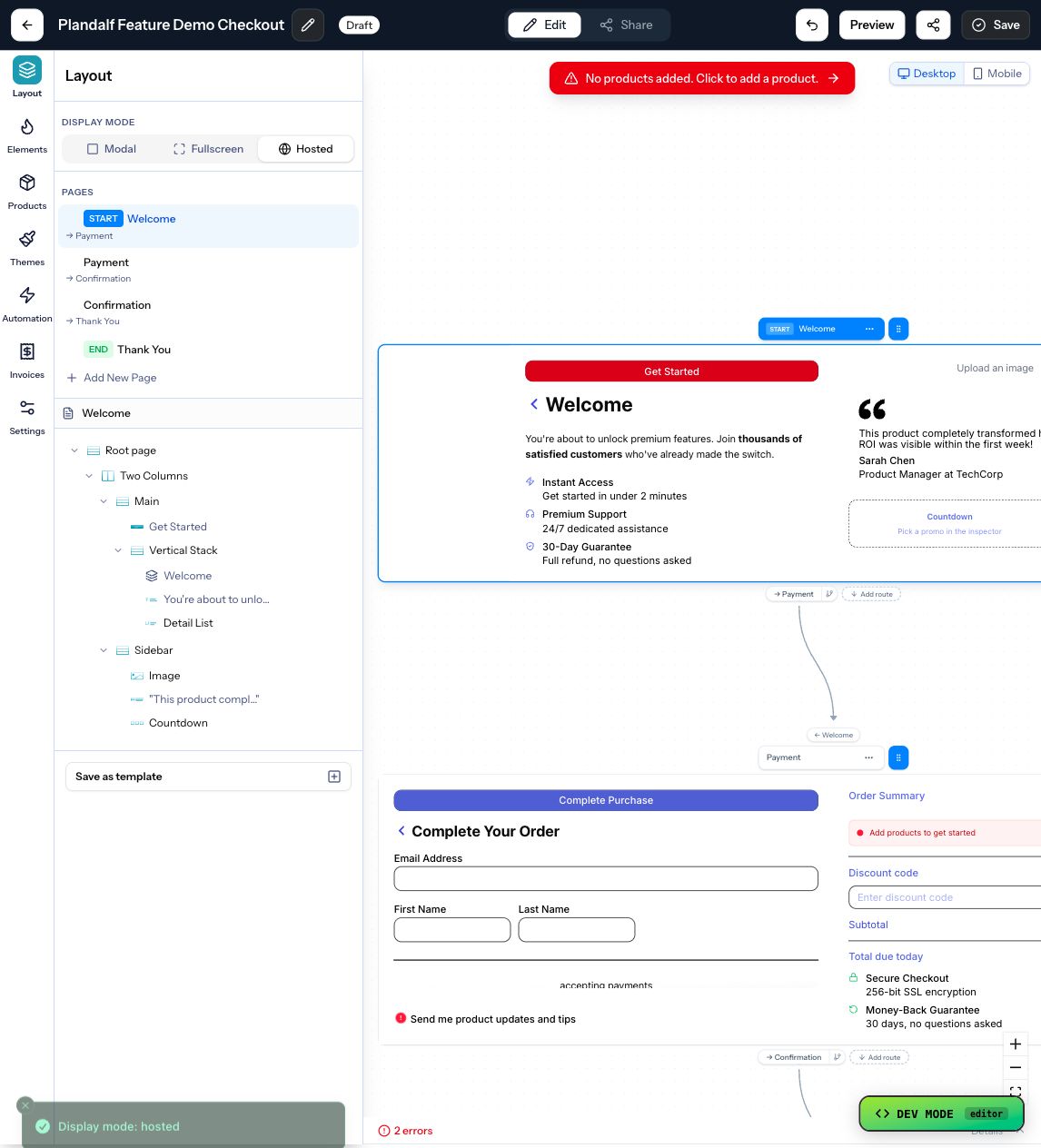
Customer stories should show the checkout surface where conversion, mobile layout, pricing, and payment options meet.
Bumps and upsells explain how a customer raises order value without bolting another app onto checkout.
Timers turn limited drops and launch windows into one deadline across marketing pages, email, and checkout.
Customer outcomes usually start with the product, subscription, one-time price, package, coupon, and payment options attached to the offer.
Invoices and records keep the buyer, product, payment state, tax context, and support handoff visible after checkout.
Purchase automation turns the customer story into fulfilment, alerts, CRM updates, webhooks, and sequences after checkout.
When a customer story mentions Shopify, checkout, save offers, upsells, order bumps, subscriptions, or Timers, these pages give the next implementation step.
Customer story
See how a DTC coffee brand moved checkout, upsells, and save flows into Plandalf Offers.
Product
The branded sales flow for launches with moving parts.
Product
Deadlines that actually change the price.
Integration
Keep the storefront while moving the buying surface into a Plandalf-hosted checkout.
Docs
Publish and test the checkout surface before customers see it.
Docs
Recover cancellation attempts with pause, plan-switch, or discount paths.
Article
Start with page speed, address autofill, and payment methods before A/B testing details.
Stack
Use the stack when a story mentions checkout conversion, pricing, payment options, and invoices.
Stack
Use the stack when customer proof depends on invoices, records, support, and payment state.
Comparison
Compare plain processor checkout with an offer layer that keeps customer context connected.